
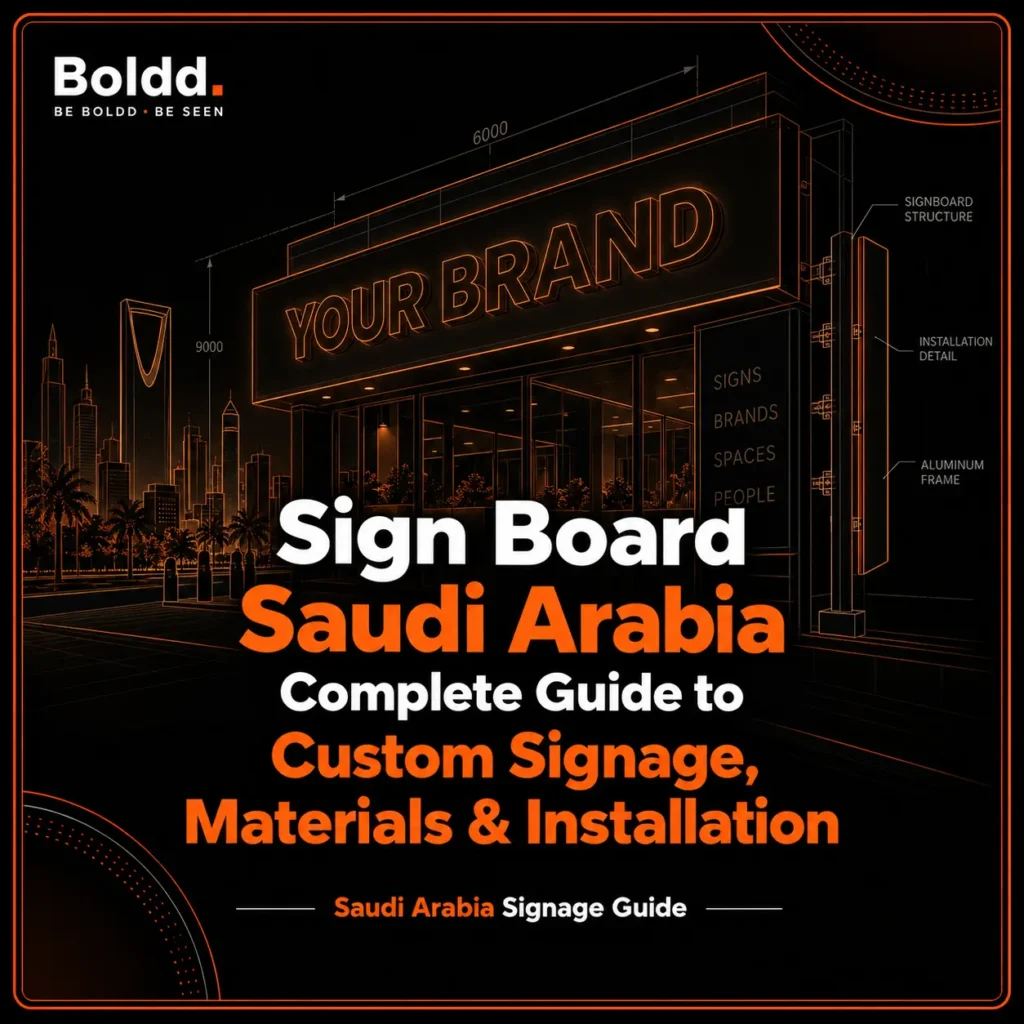

A sign board in Saudi Arabia is more than a name above a storefront. It is part of the customer experience, a permanent brand asset, and—when it is designed for the location rather than copied from a template—a powerful way to make a business easier to notice, remember, and trust.
For businesses comparing sign board manufacturers in Saudi Arabia, the real challenge is not finding someone who can fabricate letters. It is choosing the right signage system, material, lighting method, engineering approach, and installation partner for the building, city, brand, and operating environment.
This guide explains how to plan custom signage in Saudi Arabia from the first site survey to final installation. It also covers Riyadh and Jeddah considerations, illuminated and digital options, municipality requirements, cost drivers, and the questions you should ask before approving production.
What Makes a Good Sign Board in Saudi Arabia?
A good sign is not automatically the biggest or brightest sign. It is the sign that stays readable at the intended viewing distance, matches the architecture, represents the brand accurately, survives the local environment, and can be installed and maintained safely.
That balance matters in Saudi Arabia because signage may be exposed to intense sunlight, dust, heat, wind, and—in coastal markets such as Jeddah—higher humidity and salt-laden air. Material selection and finishing should therefore be treated as engineering decisions, not only aesthetic choices.
- Visibility: the letter height, contrast, illumination, and placement must work from the actual approach angle.
- Brand consistency: colors, logo proportions, typography, and finishes should match the approved identity system.
- Durability: substrates, coatings, LEDs, wiring, fasteners, and adhesives should suit the indoor or outdoor environment.
- Compliance: the design should be checked against current municipal and advertising-sign requirements before fabrication.
- Maintainability: access to power supplies, LED modules, panels, and fixings should be considered before installation.
Main Types of Sign Boards Used by Saudi Businesses
The best format depends on where the sign will be installed and what it needs to communicate. Retail storefronts, office towers, restaurants, hospitals, construction sites, and industrial facilities often require completely different signage systems.
1. 3D Letters and Channel Letter Signs
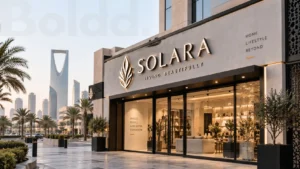
3D letters are one of the most common choices for storefronts and corporate façades. Letters can be produced from acrylic, aluminum, stainless steel, or a combination of materials, with front-lit, halo-lit, side-lit, or non-illuminated finishes.
Channel letters are especially effective when a business needs strong night visibility. The return depth, face material, LED placement, color temperature, and power-supply access all affect the final look and maintenance requirements.
2. Acrylic Sign Boards
Acrylic works well for reception logos, office signs, directional plaques, illuminated faces, and layered branding elements. It can be clear, opaque, translucent, printed, cut, engraved, or combined with metal stand-offs for a premium finish.
For exterior use, buyers should ask how the acrylic grade, thickness, UV exposure, fixing method, and thermal movement have been considered. A visually attractive acrylic panel can still fail early if it is specified only for appearance.
3. Stainless-Steel and Metal Signage
Stainless-steel letters are widely used for premium retail, hospitality, corporate, and real-estate projects because they create a clean architectural finish. Brushed, mirror, painted, titanium-style, and halo-lit finishes can all produce very different brand impressions.
Metal signage should be specified with attention to grade, welding quality, edge finishing, corrosion resistance, mounting points, and the environment in which it will be installed.
4. Illuminated Light Boxes
Light boxes are practical where a business needs a large illuminated face with strong visibility. Common constructions include aluminum frames with acrylic faces, flex faces for larger formats, or fabric systems for selected indoor applications.
Uniform illumination is critical. Good fabrication should avoid visible hot spots, dark edges, uneven tension, and difficult access to internal electrical components.
5. Digital Signage Saudi Arabia
Digital signage is useful when the content must change frequently. Retailers, restaurants, malls, clinics, corporate environments, and event spaces use LED or commercial display systems for menus, promotions, directions, schedules, and branded content.
The buying decision should include screen brightness, viewing distance, pixel pitch, indoor or outdoor rating, content management, ventilation, mounting, power, network access, and service support. A digital screen is a system, not simply a display panel.
6. Wayfinding and Directional Signage
Wayfinding helps people move through offices, hospitals, compounds, malls, parking areas, campuses, and mixed-use developments. The strongest systems use a consistent hierarchy for destinations, arrows, floor numbers, room IDs, accessibility information, and repeated decision points.
For complex sites, wayfinding should be planned as a user journey rather than a collection of isolated signs. Location strategy can be as important as the graphic design itself.
7. Road, Industrial, and Safety Signs
Businesses searching for road sign board manufacturers in Saudi Arabia often need more than standard commercial signage. Road, industrial, construction, parking, and safety applications may require reflective materials, standardized symbols, structural supports, and project-specific specifications.
Before ordering, confirm the governing authority, project specification, visibility requirements, mounting method, reflective performance, and any required approvals. Infrastructure signage should be procured against a technical specification rather than a visual reference alone.
Quick Comparison: Which Signage Type Fits Your Project?
| Type | Best For | Lighting | Typical Materials | Key Decision |
| 3D/channel letters | Retail façades, restaurants, corporate buildings | High | Acrylic, aluminum, stainless steel | Visibility, letter depth, LED access |
| Acrylic signage | Reception, office, retail interiors | Optional | Acrylic + metal/acrylic layers | Thickness, UV resistance, fixing |
| Stainless-steel letters | Luxury retail, hospitality, corporate | Optional | Stainless steel | Finish, corrosion resistance, edges |
| Light box | Storefronts, service businesses, large faces | Yes | Aluminum + acrylic/flex | Even light, access, weather sealing |
| Digital signage | Menus, promotions, malls, corporate spaces | Digital display | LED/LCD systems | Brightness, pixel pitch, CMS, cooling |
| Wayfinding | Malls, hospitals, offices, parking | Optional | Aluminum, acrylic, vinyl, digital | Hierarchy, location, legibility |
| Road/industrial | Projects, parking, facilities, infrastructure | Usually no / reflective | Aluminum, steel, reflective films | Technical specs, authority requirements |
Custom Signage in Saudi Arabia: What “Custom” Should Actually Mean
Custom signage should not mean placing a logo into a standard box and changing the color. A properly customized sign is designed around the brand, façade, viewing distance, surrounding architecture, day and night visibility, installation surface, maintenance access, and local constraints.
A useful design process starts with measurements and photographs, then moves to scaled artwork and a realistic mock-up. For illuminated signs, the design should also consider how the sign looks after dark—not only how it appears in a daytime rendering.
A strong custom-signage brief should include:
- Brand logo in vector format and approved color references.
- Exact installation address and clear façade photographs.
- Approximate width and height available for the sign.
- Viewing direction and expected distance from pedestrians or vehicles.
- Preferred sign style, material, finish, and illumination method.
- Electrical availability and proposed cable route for illuminated signs.
- Any landlord, mall, developer, or municipality design requirements.
- Target opening date or project handover deadline.
Custom Signage in Riyadh: What Businesses Should Prioritize
Riyadh is a large, fast-moving commercial market where signage is used across storefronts, business districts, restaurants, office towers, exhibitions, compounds, construction projects, and multi-branch retail. For custom signage in Riyadh, scale and visibility often need to be evaluated against wide roads, large façades, and high daytime brightness.
Outdoor signs should be planned for heat, dust, UV exposure, safe electrical routing, and secure mounting. The right solution for a pedestrian-level shop can be very different from a sign mounted high on a building or viewed mainly from moving vehicles.
When comparing sign board manufacturers in Riyadh, ask whether the supplier conducts a site survey, provides a scaled mock-up, fabricates in controlled conditions, plans installation equipment in advance, and can return for maintenance after handover.
Sign Board Manufacturers in Jeddah: Coastal Conditions Matter
Jeddah projects add another variable: coastal exposure. Humidity and airborne salt can increase the importance of corrosion-resistant materials, suitable coatings, sealed electrical components, correct fasteners, and disciplined maintenance.
This does not mean every Jeddah sign needs the most expensive material. It means the supplier should explain why a material and finish are suitable for the specific location—especially for waterfront, hospitality, outdoor retail, and exposed building applications.
For multi-city brands, it is smart to keep the visual design consistent while allowing engineering details to change by location. The same logo can be fabricated differently in Riyadh and Jeddah if the environment or mounting conditions require it.
Saudi Signage Permits and Compliance: Check Before You Fabricate
Municipal requirements should be checked before a permanent sign is manufactured. Saudi authorities updated requirements for advertising and promotional signs in 2025, emphasizing safety, urban appearance, local architectural character, and alignment with applicable design or urban codes.
The official Balady platform explains that updated requirements apply to permanent and temporary advertising billboards across Saudi cities. For licensing, businesses can also review the operational license service for advertising or promotional signs.
Requirements vary by sign type and location. Balady guidance notes, for example, that a building license may be required for some signs installed on façades and walls, fences, buildings under construction, or vacant land. Always verify the current requirements for your municipality and specific installation before approving fabrication.
A competent signage supplier can support the technical side by preparing dimensions, drawings, material details, mounting information, and visual mock-ups. The business owner or authorized representative should still confirm which permits and approvals are required for the site.
From Concept to Installation: A Professional Signage Workflow
A reliable signage project is easier to manage when every stage has a clear approval point. Skipping measurements, artwork approval, or installation planning often creates more cost than it saves.
- Site survey: confirm dimensions, façade material, access, viewing angles, power availability, and installation constraints.
- Concept and mock-up: translate the brand into a scaled sign concept and show how it will sit on the actual façade.
- Technical specification: define materials, thicknesses, letter depth, lighting, colors, mounting, and electrical requirements.
- Approval and compliance check: confirm artwork, dimensions, landlord/developer requirements, and applicable municipal requirements.
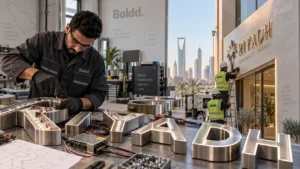
- Fabrication: CNC cutting, laser cutting, bending, welding, acrylic work, painting, printing, wiring, and assembly as required.
- Quality control: test illumination, finish consistency, dimensions, electrical components, edges, fixings, and packaging.
- Installation: plan access equipment, mounting points, electrical connection, alignment, weather sealing, and site safety.
- Handover and maintenance: document the final installation and keep maintenance access, warranty details, and replacement specifications available.
How to Choose Sign Board Materials for Saudi Conditions
Material selection should start with the environment and required lifespan, then move to appearance and budget. Two signs that look almost identical on the day of installation can perform very differently after repeated exposure to heat, dust, cleaning, moisture, and vibration.
Acrylic
Best for illuminated faces, layered logos, reception signs, and clean modern finishes. Specify thickness, color, light transmission, UV suitability, and edge treatment.
Aluminum
Lightweight and versatile for sign returns, frames, panels, wayfinding, and fabricated structures. Ask about alloy, sheet thickness, coating, and reinforcement where wind or large spans are involved.
Stainless steel
A premium choice for dimensional letters and architectural branding. It offers a refined appearance, but grade and finish should be selected for the environment, particularly in more corrosive locations.
Aluminum composite panels (ACP/cladding)
Frequently used as a façade background or branded panel system. The panel grade, core, surface coating, subframe, joints, and fire-related requirements should be evaluated for the specific building and project.
LED modules and electrical components
Lighting quality depends on more than brightness. Module spacing, color consistency, thermal management, power-supply loading, waterproofing, cable management, grounding, and service access all influence reliability.
How Much Does a Sign Board Cost in Saudi Arabia?
There is no useful single price for a sign board because the quote depends on the size, material, fabrication method, illumination, site access, structural requirements, installation height, quantity, and finish. A small reception logo and a high-level illuminated façade sign are different engineering jobs even if they use the same brand artwork.
Instead of comparing only the final total, ask every supplier to quote against the same specification. This makes it easier to understand whether a lower price comes from a genuinely more efficient solution or from thinner materials, fewer LEDs, simpler finishing, limited installation scope, or excluded access equipment.
Main factors that change signage pricing
- Overall width, height, depth, and number of letters or panels.
- Acrylic, aluminum, stainless steel, cladding, vinyl, reflective film, or digital display technology.
- Front-lit, halo-lit, edge-lit, or non-illuminated construction.
- Fabrication complexity, curves, logos, paint systems, special finishes, and sample requirements.
- Installation height, access equipment, traffic/site restrictions, and working hours.
- Electrical work, power supplies, cable routing, and control systems.
- Quantity and whether the project is one location or a multi-branch rollout.
- Permits, approvals, engineering documentation, delivery, and maintenance scope.
How to Compare Sign Board Manufacturers in Saudi Arabia
A strong supplier should be able to explain the technical reasons behind the proposed solution. Portfolio images are useful, but they do not tell you what is behind the face of the sign, how it is wired, how it is fixed, or how easy it will be to service.
Use this supplier checklist before awarding the job
- Do they survey the site before final pricing and production?
- Can they provide a scaled mock-up or shop drawing for approval?
- Are material grades, thicknesses, finishes, and lighting specifications written into the quote?
- Who fabricates the sign, and which stages are produced in-house or outsourced?
- How will the sign be mounted, powered, weather-sealed, and maintained?
- Does the quotation include installation equipment, delivery, electrical connection, and final testing?
- Can they support municipality or landlord documentation where needed?
- What exactly is covered by the warranty, and what maintenance is recommended?
- For chains, can they reproduce the same colors, dimensions, and construction across multiple branches?
BOLDD Sign Board Services in Saudi Arabia
BOLDD provides signboard design, fabrication, and installation for businesses across Saudi Arabia, including LED and illuminated signboards, acrylic and aluminum signage, 3D letters, outdoor weather-resistant signs, and custom sizes and finishes.
You can review BOLDD’s dedicated signboard services or explore the broader advertising and printing services available for brand rollouts, events, retail locations, offices, and project environments.
For businesses that need a complete launch package rather than signage alone, BOLDD also supports related physical-brand assets. This can reduce the risk of using different suppliers with inconsistent colors, artwork versions, or finishing standards.
Coordinating Signage with Brochure Printing in Riyadh
A new branch opening often needs more than the façade sign. Brochures, catalogs, flyers, menus, business cards, and other printed materials should use the same approved identity, color references, and campaign message.
If your rollout includes brochure printing in Riyadh, BOLDD’s press printing service covers brochures, catalogs, flyers, corporate stationery, posters, and custom paper finishes. Coordinating the sign and print production under one brand system helps keep the customer experience visually consistent.
When a Sign Board Is Only One Part of the Site Branding
Construction sites, property launches, events, and large commercial spaces may also need hoarding, fence graphics, banners, or large-format project branding. These should be planned with the permanent signage so the customer sees one coherent visual identity before, during, and after launch.
For these applications, see BOLDD’s hoarding and fencing solutions.
What to Send When Requesting a Signage Quote
The fastest way to receive a meaningful quotation is to send enough information for the supplier to understand the real scope. A vague request such as “How much is a 3D sign?” usually produces either a broad estimate or a quote that changes later.
- Company or brand name and vector logo file.
- City and exact project location.
- Clear front-facing and wider-context photos of the installation area.
- Approximate sign width and height, or façade dimensions.
- Preferred sign type and whether it should be illuminated.
- Reference images showing the desired visual style.
- Target completion date and opening/handover date.
- Any landlord, mall, developer, consultant, or municipality requirements already available.
Conclusion: Choose a Signage System, Not Just a Sign
The best sign board Saudi Arabia project combines design, fabrication, engineering, compliance, and installation into one coordinated system. The right material and lighting choice should come from the site conditions and business goals—not from whichever sample photo looks most attractive.
Whether you need custom signage in Riyadh, are comparing sign board manufacturers in Jeddah, or are planning a multi-city brand rollout, start with a proper brief, site survey, technical specification, and realistic mock-up. That approach makes pricing easier to compare and reduces surprises during fabrication and installation.
Ready to plan your sign? Contact BOLDD with your logo, façade photo, city, approximate dimensions, and target date to discuss a custom signage solution for your business in Saudi Arabia.
Frequently Asked Questions
What is the best type of sign board for a shop in Saudi Arabia?
For many retail stores, illuminated 3D or channel letters provide a strong balance of visibility, branding, and night-time impact. The best choice still depends on the façade, viewing distance, brand style, budget, and local requirements.
How long does custom signage take to produce?
Production time depends on design approval, size, materials, quantity, illumination, fabrication complexity, site access, and any required approvals. Ask for a written project schedule after the survey and final technical specification are approved rather than relying on a generic turnaround promise.
Do I need a permit for a business sign in Saudi Arabia?
Some advertising and promotional signs require municipal licensing or approvals, and the requirements vary by sign type and location. Check the current Balady and municipality requirements before fabrication, especially for façade, wall, fence, construction-site, and other exterior applications.
What should I ask sign board manufacturers in Riyadh or Jeddah before ordering?
Ask for a site survey, scaled mock-up, written material and lighting specifications, installation scope, permit-support details, warranty terms, and maintenance access plan. For Jeddah, also discuss corrosion resistance and coastal exposure where relevant.
Can one supplier handle signage and brochure printing in Riyadh?
Yes. Using one brand-production partner for signboards and printed materials can simplify artwork control and visual consistency. BOLDD provides signboard services as well as brochure, catalog, flyer, stationery, and other press printing services.